Homeowners' pick for appliance repair across Texas
Stove & Range Repair — Book a Visit Today
We fix gas and electric ranges from all major brands as an independent shop, so call us and tell us what happened. A stove usually quits at the worst hour, with a pan already hot. The causes are simple enough: a cracked surface element, a burnt igniter, a control board that lost track of temperature, or a spark module clicking with no flame. Gas ranges act up when burner ports clog. Electric ranges act up when a coil or infinite switch gives out. On a visit we test the burner or element, check the igniter and switches, then look at wiring and the board. After that we tell you plainly what part failed and what fixing it involves.
Call (888) 857-9883- A real person answers
- Open 7 days
- Written quote before work starts
Taking calls until 5:00 PM CT
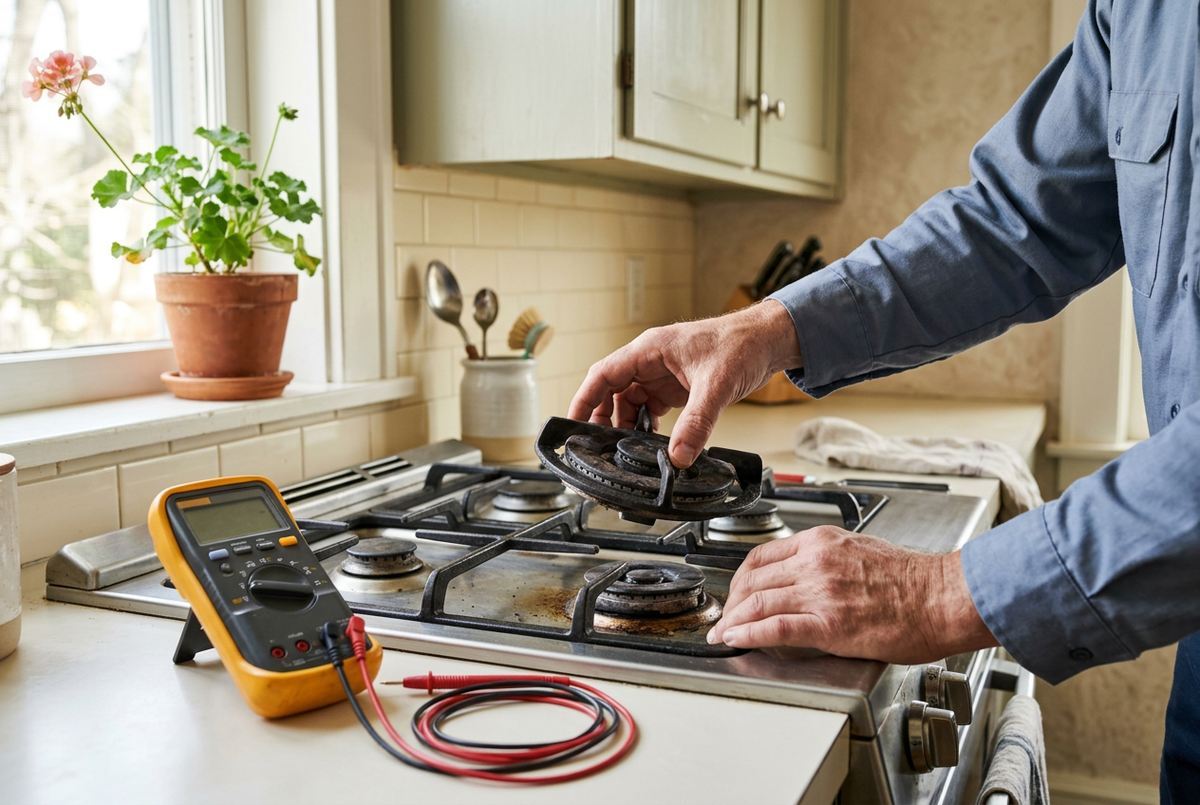
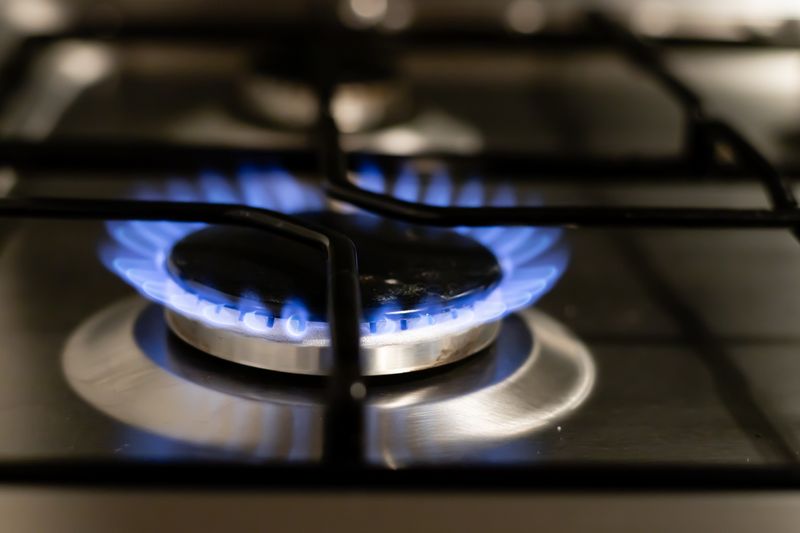
The stove & range symptoms we hear most
- "The burner clicks and clicks but never lights" Spark igniter, moisture in the module, or clogged burner ports
- "One coil stays cold, the rest heat fine" Failed surface element, burnt receptacle, or bad infinite switch
- "Cookies burn on the bottom every time" Drifting oven sensor, weak bake element, or calibration loss
- "Flames are yellow and sooty" Air shutter or orifice trouble, port buildup, wrong gas setup
- "The oven door won't unlock after self-clean" Stuck door latch motor or a thermal cutoff that tripped
Safe things to check first
Worth a look before you call — sometimes it saves you the visit.
- 1Make sure the range is plugged in tight and the breaker hasn't tripped, since electric ranges use two legs of power.
- 2On a gas model, check that the supply valve behind the range is fully open and other gas appliances still work.
- 3Pull the burner caps and grates off and look for food crust blocking the little flame ports.
- 4Set an oven thermometer on the center rack and see how far off the real temperature runs.
What homeowners get from an independent shop
| Appliance Tech | Big-box repair chains | Handyman listings | |
|---|---|---|---|
| Written quote before any work | ✓ | ✕ | ✕ |
| Live answer seven days a week | ✓ | ✕ | ✓ |
| All major brands, gas and electric | ✓ | ✓ | ✕ |
| Independent, no manufacturer quotas | ✓ | ✕ | ✓ |
| Crews familiar with homes like yours | ✓ | ✕ | ✓ |
What homeowners say after the visit
“Quote came by text within the hour, visit the next day, repair in forty minutes.”
Sonia H.El Paso, TX“The kick panel came off, the coil got vacuumed, the fridge stopped roaring. Simple, honest work.”
Neil F.Plano, TX“I asked a dozen questions and never felt rushed. The repair held through the holidays with a full house.”
Paula J.Garland, TXStove & Range Repair — quick answers
Do you handle both gas and electric ranges?
Yes. Coil and smooth-top electric ranges, sealed-burner gas ranges, and dual-fuel setups all come through our schedule. Repairs differ by fuel type, so tell us which one you have when you call us and we will bring likely parts.
My oven smells like gas. What should I do?
Stop using it. Shut the gas valve behind the range if you can reach it safely, open windows, leave switches and flames alone, and step outside. Call your gas utility or the fire department first. Reach us afterward for the repair itself.
Why does my glass cooktop cycle on and off while cooking?
That is often normal. Radiant elements pulse to hold a setting instead of running steady. If the pulsing feels too long or heat never reaches the setting, the infinite switch or the element may be failing and worth a look.
Can hard water hurt a stove?
Indirectly, yes. West Texas water leaves mineral film on grates, drip pans, and cooktop glass. Scrubbing that film with harsh pads scratches surfaces and can damage seals. Warm water and a cooktop cleaner treat the buildup more kindly.
Is a wobbly oven door worth repairing?
Usually. A sagging door leaks heat, so baking runs uneven and the outside gets hotter than it should. Hinges, springs, and the door gasket are serviceable parts. We check the seal and hinge tension during the visit.
How long does a typical stove repair take?
Many jobs finish in one visit once we confirm the failed part. Elements, igniters, and switches are common stock items. Control boards and specialty parts for older models sometimes need ordering, and we will say so straight away.
How it works
- Step 1
Tell us the symptom
Call us or fill out the form and describe what you hear, smell, or see. A noise, a leak, an error code, a burning odor. Give us the brand and rough age if you know them.
- Step 2
We come look
A technician shows up with common parts on the truck. We test the machine instead of guessing. Then we explain what failed in plain words, and what the repair takes, before anything gets opened up.
- Step 3
You decide, we repair
Nothing gets replaced without your go-ahead. Most repairs finish the same visit. If a part has to be ordered, we tell you straight and set a return time that works for your day.
- A real person answers
- Open 7 days
- Written quote before work starts
Why homeowners call us
- Hard water is our specialtyWest Texas scale wrecks dishwashers, ice makers, and water valves, and we see it daily. Spray arms clog. Heating elements crust over and inlet screens choke up white. We clean and replace the parts scale eats first.
- Built for Texas summersHeat pushes refrigerators and freezers hard. Condenser coils pack with dust, compressors run nonstop, and garage freezers quit in triple digits. We check cooling systems for heat load, not just for the obvious broken part.
- Plain talk, no runaroundWe tell you what died and why. If a machine is not worth fixing, we say so. You get the reasoning instead of a sales pitch, and you make the call yourself.
- Most brands, most machinesWashers, dryers, ranges, ovens, dishwashers, fridges, freezers. We work as an independent shop on all major brands, top load and front load, gas and electric. One call covers the laundry room and the kitchen.
- All major brands, gas & electricEvery major appliance brand, gas and electric, handled by an independent shop.
- Straight answersWhen a repair doesn't make sense, we tell you, sometimes before we even roll a truck.
Stove & Range Repair
Small faults become big ones on a schedule of their own
Describe the symptoms and we'll book the visit — takes about a minute.
- A real person answers
- Open 7 days
- Written quotes
- All major brands
- Gas & electric
Rather not call? Get a free quote →